
 Posts
Posts


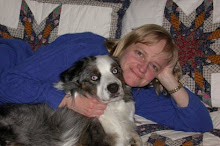
I just had to perform one of the most feared things to do as a libriarian (at least for me); catalog a foreign language book. Yikes. This particular book was in French. The title is "Secouée mais secourue" by Paula Ort. The word "secourue" was in the title which sound kind of like "succor" which means to "assistance in times of difficulty" (Visuwords.com) so I had a bit of idea as to what it might be about. I was on the right track, but didn't know what the book was truly about until I used Babelfish to translate a portion of it. A word of caution, however. Don't just type in Babelfish.com. You will get a site that tries to get you to use professional translation companies. This site doesn't actually translate anything. The site to use was purchased by Yahoo awhile back, so go to http://babelfish.yahoo.com/.
I typed in the first 3 paragraphs in French into Babelfish and had it translated into English. I found out that the author of the book woke up in the middle of the night when she heard some young people talking outside of her window. Then she felt something under her armpit and knew she had a tumor. Okay, I wasn't expecting that! Once I figured that much out, and by scanning through more of the book, I was able to get enough information to catalog it. I think Rivendell College Library is the only library in the world with this book! I couldn't find it anywhere else.
Back to Babelfish. If you have whole parts of a language you need to have translated, this is a great site. It is different than a dictionary since it will take a whole paragraph or sentence or whatever and translate it. There is also a link to where you can have a whole webpage translated. Just copy and paste the URL into the appropriate box on Babelfish and it will translate the whole original page! The syntax into English might not be perfect, but you can certainly get the idea of it.
Babelfish is a really powerful tool. So don't be afraid of foreign language websites. You might be able to get it translated as long as the site is in Chinese (simp.), Chinese (trad.), Dutch, French, German, Greek, Italian, Japanese, Korean, Portuguese, Russian or Spanish.
Tuesday, April 28, 2009

Monday, April 27, 2009
Saving the planet one search at a time
I know I'm a little slow on the whole Earth Day thing, since it was last week. But just in case you want to save energy more than that one day a year, you can use Blackle as your search engine. It is from Heap Media using Google custom searching. It kind of looks like Google, only the screen is black. Apparently, it will save hundreds of mega-watt hours of energy every year since it takes more energy to display white than black on a screen. The Blackle people admit that there is a lot of skepticism as to how significant the energy savings will be. Personally, I don't think it will make a whole lot of difference, but if people think it is a good thing, more power to them (no pun intended).
Thursday, April 23, 2009
World Digital Library
On April 21, 2009, the United Nations launched the World Digital Library, which is digital collection of historic maps, recordings and other artifacts from all over the world. The collection can be browsed by place, time, topic, type of item and the institution which owns it. Many of the artifacts are held by national libraries from around the world, including the Library of Congress, which has digitized over 500 artifacts for this collection. Click on one of the artifacts and it will open a window giving your more information about it. Click on the "Open" button below the thumbnail and it will open another window in which you can zoom in to look at the artifact more closely. Check out the first printed copy of the the Declaration of Independence.
Spend some time in this site. The old motion pictures are really interesting, as are the photographs and maps. The pages on the books can be "turned," much like the gallery of artifacts done by the British Library (see my previous post).
Spend some time in this site. The old motion pictures are really interesting, as are the photographs and maps. The pages on the books can be "turned," much like the gallery of artifacts done by the British Library (see my previous post).
Tuesday, April 21, 2009
Happy Birthday to the Queen
I admit it. I'm an Anglophile. I read books on British history just for fun. The Royal family and the pagentry of it all fascinates me. We are going to London this summer to see all of the cool, touristy stuff. So, today is a big day. Today, April 21st is Queen Elizabeth II's 83rd birthday. The official celebration of the Queen's birthday takes place on a Saturday in June in a ceremony called Trooping the Colour. They have the ceremony in June so as to have a better chance of good weather. The Queen used to ride her horse in the ceremony, but she now rides in a carriage. We will be able to see the carriages and all of the tack they use when we will visit the Royal Mews.
Also today, April, 21, 1509, Henry VIII ascended to the throne. As I mentioned in a previous post, there will be all kinds of cool exhibits of Henry VIII stuff when we go to London this summer.
The official website of the British Monarchy is here. There is also an official Royal YouTube channel here. Enjoy!
Also today, April, 21, 1509, Henry VIII ascended to the throne. As I mentioned in a previous post, there will be all kinds of cool exhibits of Henry VIII stuff when we go to London this summer.
The official website of the British Monarchy is here. There is also an official Royal YouTube channel here. Enjoy!
Monday, April 20, 2009
His Brain, Her Brain
I just came inside from having a great conversation with my wonderful next door neighbor, Brooke. We sometimes chat out in front of her house when we are both out front bringing in the trash cans or picking up the mail. We have great conversations about all kinds of things. Today, as our conversation progressed, I was able to tell her a funny story about what I had heard on the radio a number of years ago regarding the development of male fetuses.
I was driving to work one day when I was living in LA. Being stuck on the 405 for 45 minutes on the way to work gave me a lot of time to listen to the radio. I was listening to Dr. Dobson on Focus on the Family and he had a guest on who talked about the "testosterone wash" that happens during the development of a male fetus. The testosterone wash causes the corpus callosum (the pipeline that allows the two hemispheres of the brain to talk to each other) to be "damaged." Therefore, women think different then men. Men tend to be more logical and sequential. Women usually see the world in a more "holistic" way, seeing the interconnections between things than perhaps men don't. As we are fond of saying around here, "Women think with both sides of their brains at the same time."
Back to LA. I thought this was really interesting and was telling what I had heard to a group of people at lunch that day, several women and one man. At the end of my telling the story, all of the women nodded their heads and said, "Yeah, that makes sense." The one man at the table said, "Wait. Start and the beginning and tell me all of this again." We all laughed as I said, "Thank you for making my point!"
Brooke was really interested in this. I thought it would be interesting to see what the literature is out there on this. I found this great .pdf article by Walter L. Larimore, M.D. called His Brain, Her Brain (this .pdf is actually excerpted from his and Barb Larimore's book by the same name). Right off the bat it talks about the testosterone wash. It also talks about an estrogen wash (which I didn't know about) and how these washes affect the way men and women interact, think and see the world. Although this article is written for health care providers and how to better understand and relate to their male and female patients, I think reading this whole article is a great resource for understanding your mate and why he or she acts the way they do. It just might give you some tools to have effective communication.
I was driving to work one day when I was living in LA. Being stuck on the 405 for 45 minutes on the way to work gave me a lot of time to listen to the radio. I was listening to Dr. Dobson on Focus on the Family and he had a guest on who talked about the "testosterone wash" that happens during the development of a male fetus. The testosterone wash causes the corpus callosum (the pipeline that allows the two hemispheres of the brain to talk to each other) to be "damaged." Therefore, women think different then men. Men tend to be more logical and sequential. Women usually see the world in a more "holistic" way, seeing the interconnections between things than perhaps men don't. As we are fond of saying around here, "Women think with both sides of their brains at the same time."
Back to LA. I thought this was really interesting and was telling what I had heard to a group of people at lunch that day, several women and one man. At the end of my telling the story, all of the women nodded their heads and said, "Yeah, that makes sense." The one man at the table said, "Wait. Start and the beginning and tell me all of this again." We all laughed as I said, "Thank you for making my point!"
Brooke was really interested in this. I thought it would be interesting to see what the literature is out there on this. I found this great .pdf article by Walter L. Larimore, M.D. called His Brain, Her Brain (this .pdf is actually excerpted from his and Barb Larimore's book by the same name). Right off the bat it talks about the testosterone wash. It also talks about an estrogen wash (which I didn't know about) and how these washes affect the way men and women interact, think and see the world. Although this article is written for health care providers and how to better understand and relate to their male and female patients, I think reading this whole article is a great resource for understanding your mate and why he or she acts the way they do. It just might give you some tools to have effective communication.
Sunday, April 19, 2009
Worldmapper
I was helping my daughter, Sarah, with her homework today for her World Geography class. This made me think of this really interesting site I had run across in the past called Worldmapper.
It has world maps, but they are not static. The size of the countries change in relation to each other based on the subject. Click on "Map Categories" on the top bar and it will show you the maps you can look in each category. It is a great way to graphically and intuitively understand our world.
Sarah and I spent some time today looking at some of the different categories. Some were funny: The number of Chinese Universists in the world are, not surprisingly, primarily in China. Some made our hearts break, like the number of cases of malaria.
Each map gives a link to a .pdf file which makes it possible to print out that map and its corresponding information.
So go ahead and look around at this site. Find out which countries import the most fish. You know you want to know.
It has world maps, but they are not static. The size of the countries change in relation to each other based on the subject. Click on "Map Categories" on the top bar and it will show you the maps you can look in each category. It is a great way to graphically and intuitively understand our world.
Sarah and I spent some time today looking at some of the different categories. Some were funny: The number of Chinese Universists in the world are, not surprisingly, primarily in China. Some made our hearts break, like the number of cases of malaria.
Each map gives a link to a .pdf file which makes it possible to print out that map and its corresponding information.
So go ahead and look around at this site. Find out which countries import the most fish. You know you want to know.
Thursday, April 16, 2009
Tail-waggin'

Yesterday, our Golden Retriever, Bella, was watching out one of our windows as a couple of neighbor kids were playing on their jungle gym. You could tell she had spotted them since she stood really still and her ears were perked forward. Also, her tail was still and just turned toward her left side, just a little. When my daughter, Sarah, called Bella's name, her tail then swung to the right. (No, there are no political jokes here!) That reminded me of something I had seen on TV some time ago. I don't remember exactly where I saw it, but I think it was on the National Geographic channel and it was a special about dogs. The program was talking about how the direction a dog's tail wags tells you a lot about how the dog is feeling.
I decided to try to find out more about this phenomenon. It took awhile. There is a lot of information about a dog's tail wagging in general and how they carry it. I tried Googling various keywords like "Dog Tail Carriage Recognition" because part of the story was that the dog would put it's tail to the right if it recognized it's owner. I finally found it when I Googled "Study Dog Tail Recognition".
One of the articles I found is from the New York Times. The study is called, "Asymmetric Tail-wagging Responses by Dogs to Different Emotive Stimuli." Some researchers in Italy put volunteer dogs in crates with cameras above their hind-quarters to record what would happen when the dogs saw different things: their owner, an unfamiliar human, a cat, and a unfamiliar dominant dog.
This was the results from the New York Times:
When the dogs saw their owners, their tails all wagged vigorously with a bias to the right side of their bodies, Dr. Vallortigara said. Their tails wagged moderately, again more to the right, when faced with an unfamiliar human. Looking at the cat, a four-year-old male whose owners volunteered him for the experiment, the dogs’ tails again wagged more to the right but in a lower amplitude.Click on the multimedia clip on the Times Page as well. It gives you a real feel for what the study shows.
When the dogs looked at an aggressive, unfamiliar dog — a large Belgian shepherd Malinois — their tails all wagged with a bias to the left side of their bodies.
Thus when dogs were attracted to something, including a benign, approachable cat, their tails wagged right, and when they were fearful, their tails went left, Dr. Vallortigara said. It suggests that the muscles in the right side of the tail reflect positive emotions while the muscles in the left side express negative ones.
Our other dog is Smokey, the Australian Shepherd. He has a little stubby tail, so watching it won't tell us much. But he does wiggle his whole rear-end when he gets excited, so we are going to watch and see if his rear-end goes one way or the other.
Dogs are so entertaining!
Subscribe to:
Comments (Atom)